

Checked on
Regulation (EU) 2019/947 governs drone operations. Regulation (EU) 2019/945 sets technical requirements and class markings. Recreational and professional operations fall into three categories based on flight risk.
Open category
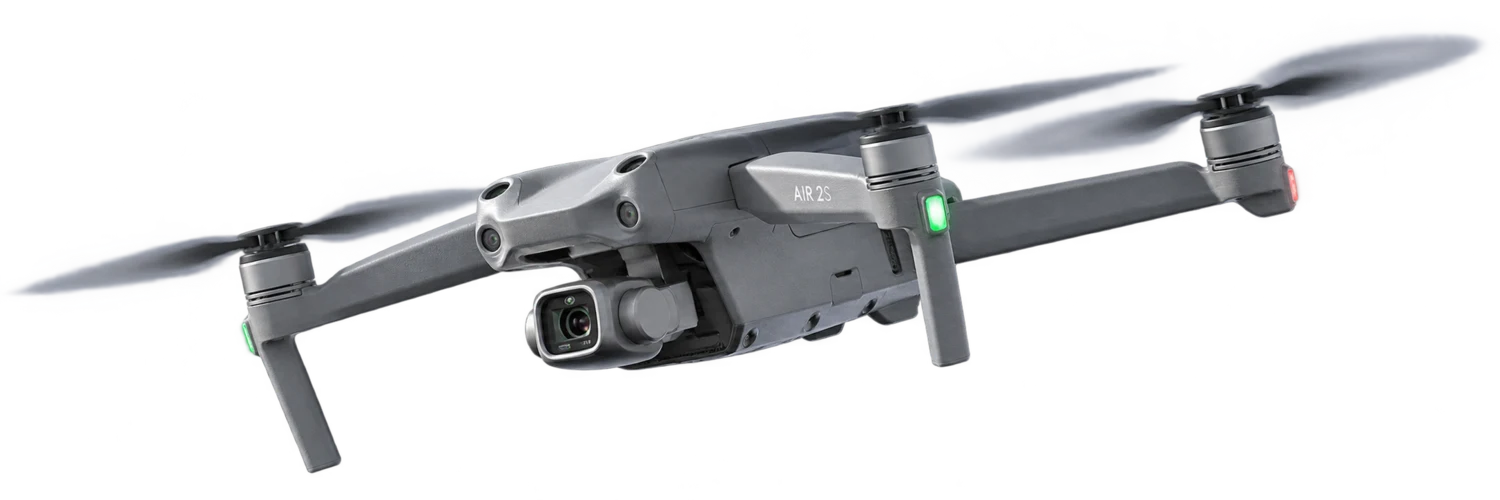
For low-risk operations, keep the drone within visual line of sight (VLOS), normally within 120 m of the closest point on the Earth’s surface. Flying over assemblies of people is prohibited. At night, activate a green flashing light on the drone. Geographical zones may impose local limits or require permission. EU rules do not require prior operational authorisation for the Open category.
| Subcategory | Class or mass | People and distances | Certificate |
|---|---|---|---|
| A1 | C0 (< 250 g), drones under 250 g without a class marking placed on the EU market before 1 January 2024, and privately built drones under 250 g with a maximum speed below 19 m/s. | Flying over individual uninvolved people is permitted and should be avoided where possible. | No certificate is required. For C0, read the manual. |
| A1 | C1 (< 900 g or meeting the class impact-energy requirement). | Plan to avoid flying over uninvolved people. If it happens unexpectedly, minimise the time spent overhead. | A1/A3 |
| A2 | C2 (< 4 kg). | Never fly over uninvolved people. Keep at least 30 m away horizontally. You may reduce that to 5 m with low-speed mode active, after assessing the conditions. | A2, after completing A1/A3, practical self-training under A3 conditions and an additional theory exam. |
| A3 | C2, C3 or C4, privately built drones under 25 kg and drones under 25 kg without a class marking placed on the EU market before 1 January 2024. C0 and C1 drones can also fly under A3 conditions. | Keep at least 150 m away horizontally from residential, commercial, industrial or recreational areas. Choose an area where you can reasonably expect that no uninvolved person will be endangered. | A1/A3, with the exemptions that apply to drones already permitted in A1 without a certificate. |
Specific category
This category covers operations beyond the limits of Open and outside the scope of Certified. Flights require a declaration under a European standard scenario, operational authorisation from the competent authority, or applicable privileges under a Light UAS Operator Certificate (LUC).
- STS-01 · Class C5
- Visual line of sight (VLOS) flight over a controlled ground area, including in a populated environment, under the conditions of the scenario.
- STS-02 · Class C6
- Beyond visual line of sight (BVLOS) flight over a controlled ground area in a sparsely populated environment, within the limits of the scenario and with airspace observers when required.
When applying for operational authorisation, submit a risk assessment using SORA 2.5 or an applicable PDRA. Declarations based on Italian national standard scenarios (IT-STS) ceased to be valid on 1 January 2026.
Certified category
This category covers high-risk operations subject to certification. The framework requires certification of the drone and the operator and, where applicable, a remote pilot licence.
Class marking and Remote ID
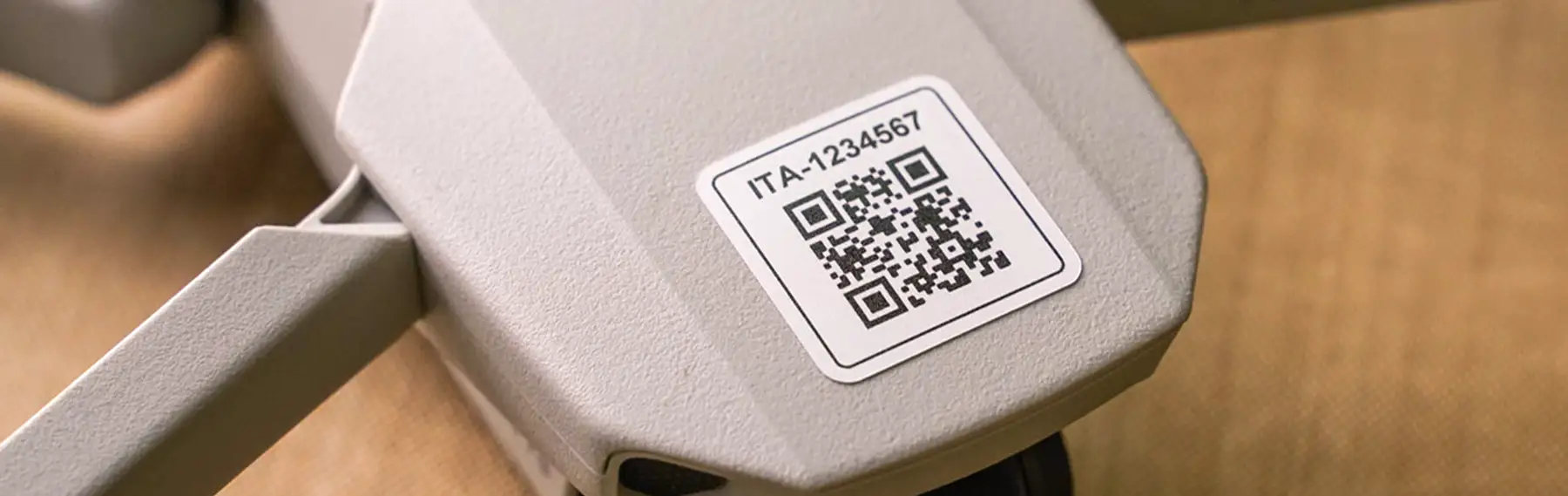
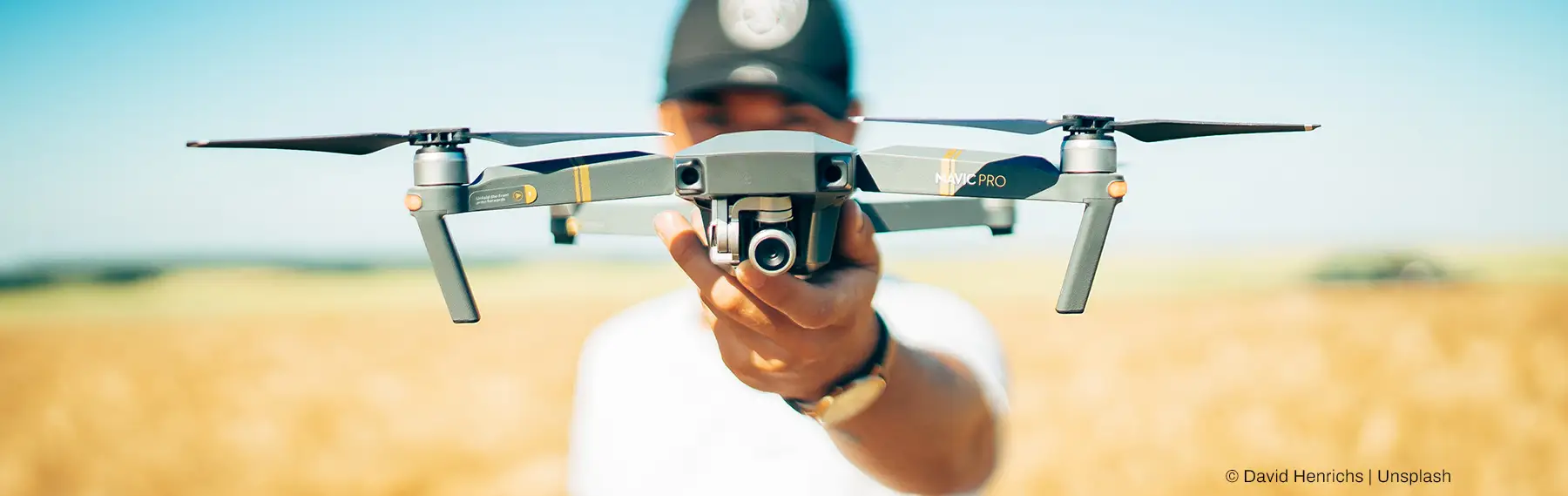
Check the drone’s class label and EU declaration of conformity. In the Open category, direct remote identification is required for C1, C2 and C3. In the Specific category, check the requirement and any exceptions that apply to the zone or operation. The QR label identifies the operator on the drone. Remote ID broadcasts identification data during flight.
The 100 g threshold for extending registration and Remote ID requirements remains an EASA proposal.
Pre-flight checklist for Italy
- Operator registration and QR label. In the Open category, register if the drone has a maximum take-off mass of at least 250 g, can transfer more than 80 J on impact, or has a sensor capable of capturing personal data. The sensor criterion excludes toys that comply with the relevant directive. A camera drone under 250 g therefore normally requires registration. If you reside in Italy or have your principal place of business there, use d-flight and affix the QR label to the drones you use. Register in only one EASA member state. Registration is required in the Specific category regardless of the drone’s mass.
- Third-party liability insurance. Check that your third-party liability cover is active and appropriate for the operation.
- Pilot competency. Check the proof of competency required for the subcategory. A1/A3 and A2 credentials are valid for five years.
- Flight zone. Check d-flight for limits, prohibitions and conditions, including any required clearances. For Specific operations, also check the planning requirements that apply to the flight.
- Equipment. Check Remote ID where required and switch on the green flashing light when flying at night in the Open category.
Official sources · Regulation 2019/947 · Regulation 2019/945 · EASA Open · EASA Easy Access Rules · ENAC UAS-IT · ENAC Specific
Glossary
- APR · Remotely piloted aircraft
- Historical Italian acronym for an aircraft flown remotely without people on board.
- BVLOS · Beyond Visual Line of Sight
- Flight beyond visual line of sight. Depending on the operation, it can fall under the Specific category, for instance under STS-02, or under Certified.
- EASA · European Union Aviation Safety Agency
- Develops regulatory proposals and publishes guidance and means of compliance for European civil aviation safety.
- ENAC · Italian Civil Aviation Authority
- Italy’s civil aviation authority. For drones, it oversees national regulation, authorisation and compliance.
- EVLOS · Extended Visual Line of Sight
- A term used for flight with observer support. If the remote pilot loses direct visual contact, the presence of observers does not make the operation VLOS in the Open category.
- LUC · Light UAS Operator Certificate
- A certificate that can grant operators the privilege to authorise certain Specific operations themselves.
- MTOM · Maximum Take-Off Mass
- The maximum take-off mass specified by the manufacturer or builder, including the battery and payload.
- PDRA · Pre-Defined Risk Assessment
- A predefined risk assessment that can support an application for an operational authorisation if the operation meets the published conditions.
- Remote ID · Direct remote identification
- Local broadcast during flight of the required identification data for the drone and its operator.
- SAIL · Specific Assurance and Integrity Level
- A level from I to VI determined through SORA. It indicates the assurance required to meet the operation’s safety objectives.
- SAPR · Remotely piloted aircraft system
- Historical Italian acronym for the aircraft and the components used to operate it remotely.
- SORA · Specific Operations Risk Assessment
- A method for assessing the ground and air risks of a Specific operation and determining the necessary mitigations.
- STS · Standard Scenario
- A standard scenario with prescribed conditions and procedures. The operator declares compliance before flying.
- UA / UAV · Unmanned Aircraft / Unmanned Aerial Vehicle
- Terms for the aircraft itself. EU regulations use UA.
- UAS · Unmanned Aircraft System
- The unmanned aircraft and the equipment used to control it remotely.
- VLOS · Visual Line of Sight
- Flight in which the remote pilot keeps direct visual contact with the drone, sufficient to control its flight path and avoid obstacles, people and other aircraft. An unmanned aircraft observer alongside the pilot can assist.