
Before a photography flight, I choose my subject and the light I’m looking for. Then I check whether I can fly at that location and time.
1. Check the flight zone
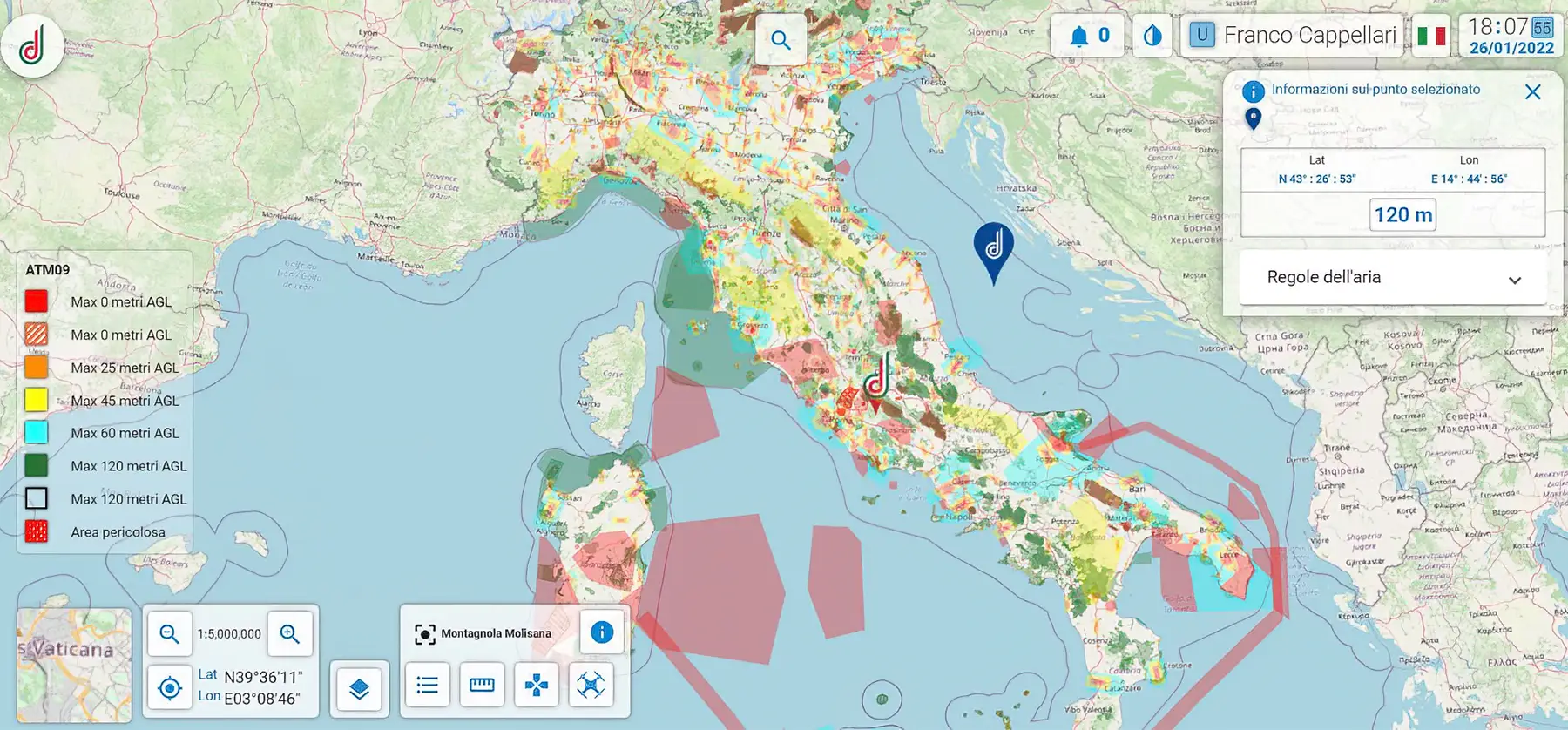
In Italy, check the d-flight map. Find your take-off point and check the entire area you intend to fly over. Select the zone to see altitude limits, access conditions and any temporary restrictions. Check again before take-off.
2. Choose the light and framing
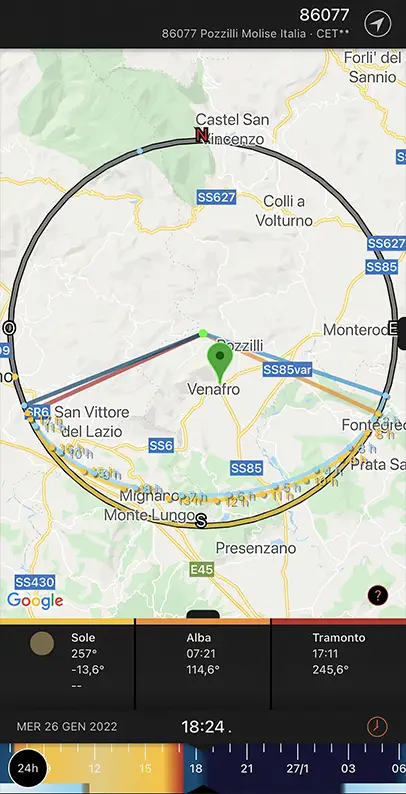
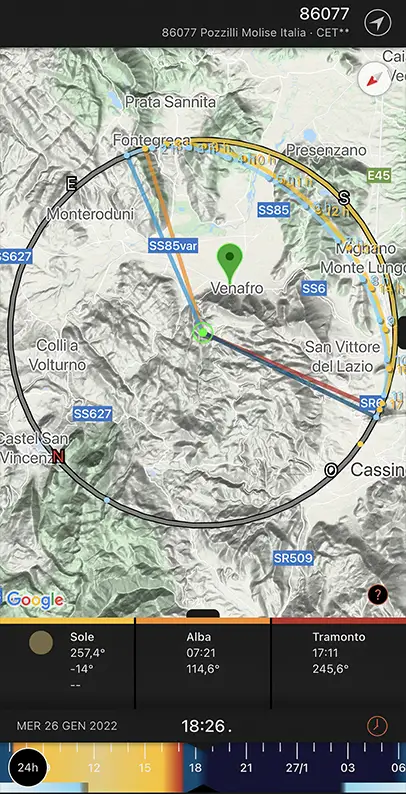
Find your subject and intended shooting position on the map. Early in the morning or late in the afternoon, low-angle light and long shadows bring out the shape and texture of the terrain. More direct light around midday can work well for top-down shots, especially when you want to highlight colour, geometry and contrast.
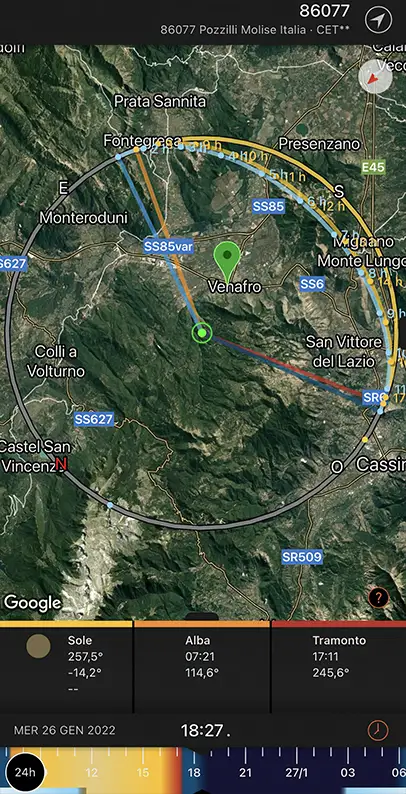
I use Sun Surveyor to check the direction and elevation of the sun for the date and time of the shoot. That helps me decide which way to approach and whether the subject will be lit or in shadow.
3. Assess the weather and plan the return flight
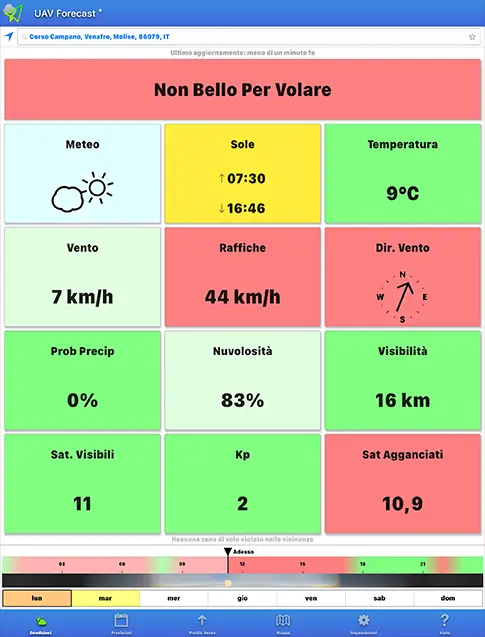
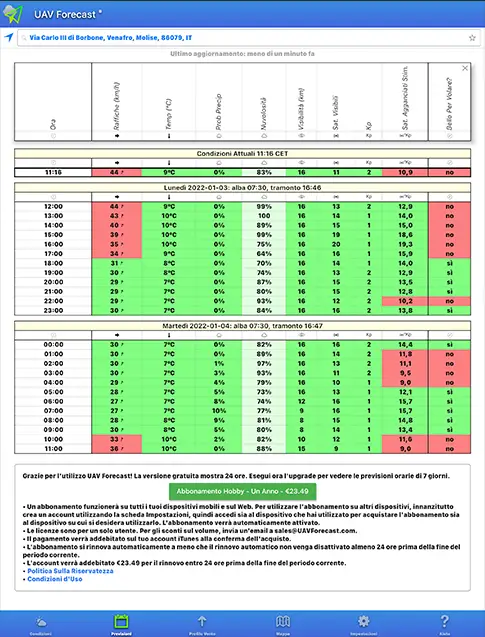
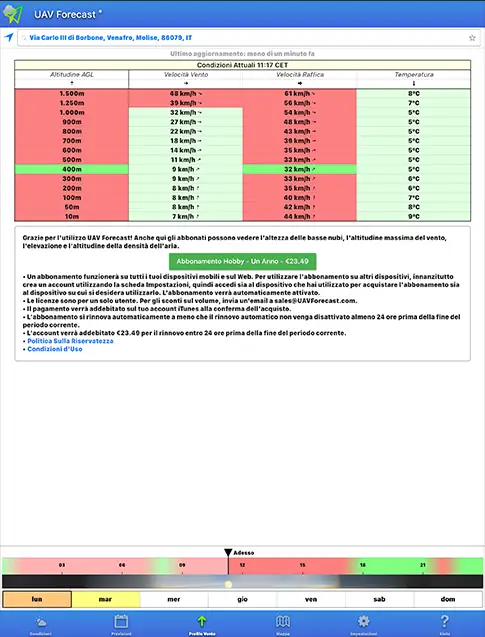
Broken cloud can cast interesting shadows across the landscape. For the flight itself, check visibility, precipitation, gusts and wind at your intended altitude. Choose an alternative landing site and allow enough battery for the return, especially if you’ll be flying into a headwind.
UAV Forecast helps you compare forecast conditions at different times. Use the tables to decide when to arrive. Before taking off, check the forecast against actual conditions, your drone’s limits and any alerts in the flight app.
4. Check the Kp index
TheKp index measures geomagnetic activity on a scale of 0 to 9. During a geomagnetic storm, satellite positioning can become less accurate. Use the index for context and check the drone’s positioning status and any warnings on site.
5. Travelling with your drone
For European destinations, start withEASA’s list of authorities and official maps. Outside Europe, check with the local aviation authority and confirm the rules for bringing a drone into the country.
Interactive world drone map
Use this third-party map for an overview of recreational drone rules in different countries. Before travelling, always check the current rules with the aviation authority at your destination.
Air travel
Carry spare lithium batteries in hand luggage and protect the terminals against short circuits. Before departure, check with your airline how many batteries you may carry, the limits in Wh and the conditions for transporting the drone. See also EASA’s guidance on lithium batteries.